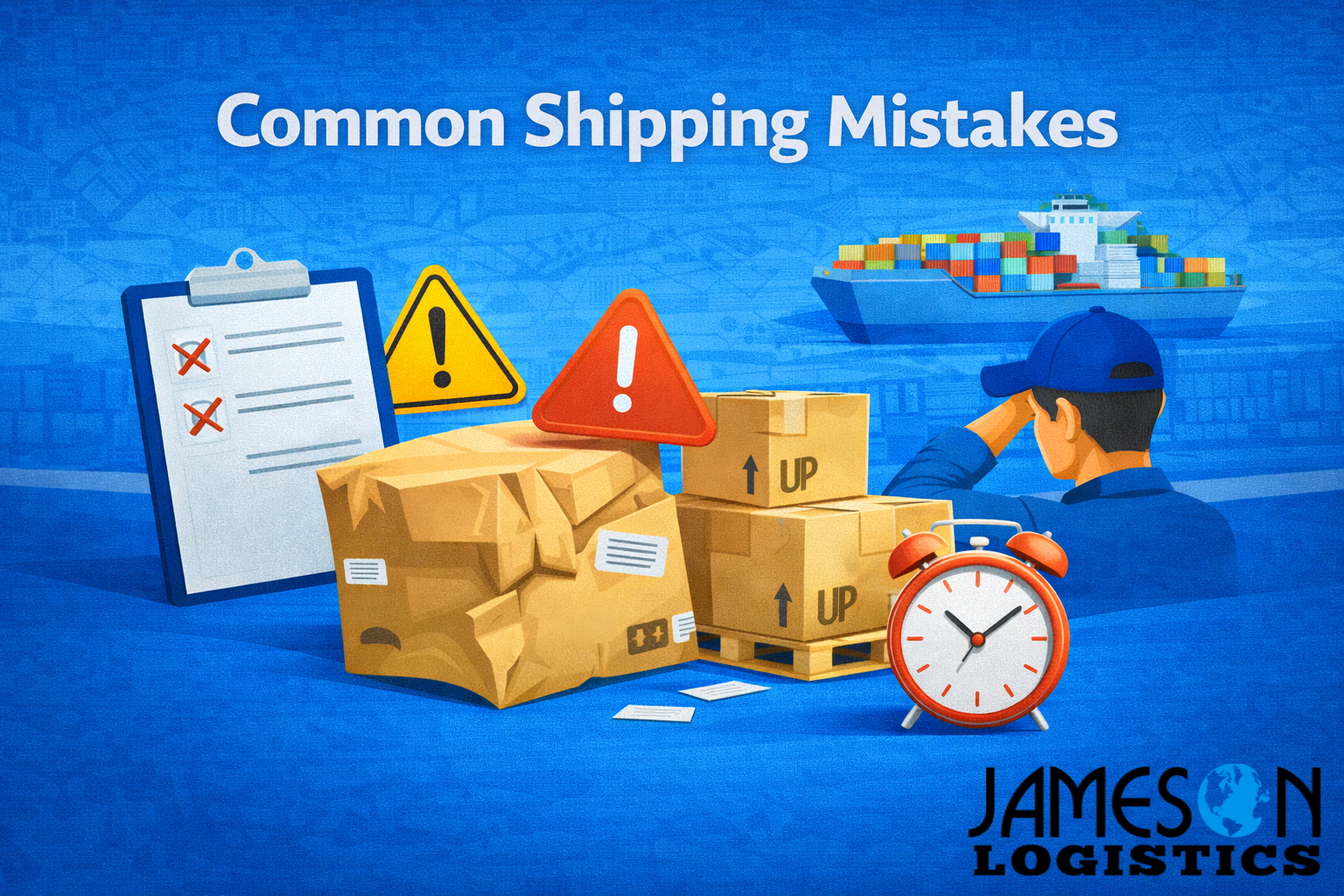
A single shipping mistake can trigger costly delays, unexpected fees, missed customer expectations, and disruptions that ripple throughout your entire supply chain.
Shipping freight is rarely as simple as getting a rate and scheduling a pickup.
Between changing market conditions, carrier availability, appointment requirements, shipment details, and service expectations, even experienced shipping teams can run into issues that lead to delays, added costs, and unnecessary frustration.
The good news is that many common shipping problems can be avoided with the right planning, accurate information, and a dependable transportation strategy.
At Jameson Logistics, we work with shippers across a variety of industries, and we often see a few recurring issues that can create problems before the freight ever moves.
Here are four common shipping mistakes — and how to avoid them.
Mistake #1: Waiting Until the Last Minute to Book Shipments
One of the most common causes of shipping problems is waiting too long to secure transportation.
When freight needs to move immediately, available carrier options may be limited, rates can increase, and it becomes more difficult to meet pickup and delivery expectations.
How to avoid it:
Whenever possible, plan shipments in advance. Reviewing upcoming freight needs, recurring lanes, and seasonal volume can help secure capacity before it becomes urgent — especially during periods of high demand.
Even a little advance notice can make a big difference in both pricing and service.
Mistake #2: Providing Incomplete or Inaccurate Shipment Information
Bad shipment data = costly mistakes.
A wrong address, incorrect weight, missing pickup number, or forgotten delivery instruction can trigger delays, re-delivery fees, and unexpected charges.
How to avoid it:
Before booking, verify:
- Pickup and delivery addresses
- Contact information
- Weight, dimensions, and pallet count
- Commodity description
- Special requirements or appointments
A quick checklist can save time, money, and frustration.
Mistake #3: Choosing the Lowest Rate Without Considering Service
Controlling transportation costs is important. However, choosing a carrier based only on the lowest price can sometimes create more expensive problems later.
A lower rate may not be worth it if the result is poor communication, missed appointments, damaged freight, late deliveries, or unreliable tracking updates.
We have seen situations where a small savings on the front end led to costly delays and operational headaches that far outweighed the original discount.
How to avoid it:
Evaluate both price and performance. A strong transportation decision should consider the carrier’s reliability, communication, equipment availability, service history, and ability to meet your specific requirements.
The goal is not always to find the cheapest option. The goal is to find the best value.
Mistake #4: Ignoring Seasonal and Market Conditions
Freight markets are always changing.
Seasonal demand, weather events, produce season, holidays, fuel costs, regional capacity shifts, and overall market conditions can all affect pricing and availability.
When shippers do not account for these factors, they may be caught off guard by tighter capacity, higher rates, or limited carrier options.
How to avoid it:
Review historical shipping patterns and plan ahead for seasonal changes. If you know certain months, lanes, or customers create higher shipping volume, it is best to prepare early.
Working with a logistics partner who monitors market trends can also help you make better decisions before capacity becomes a problem.
Partnering for Better Shipping Results
Many freight challenges can be reduced — or avoided entirely — with proactive planning, accurate shipment details, and the right transportation partner.
At Jameson Logistics, we help customers navigate truckload and LTL shipping with reliable carrier options, practical guidance, and responsive communication.
Whether you are moving one shipment or managing recurring freight, our goal is simple:
Help you move freight efficiently, reliably, and with fewer surprises.
If you have an upcoming shipment or would like to review your current transportation process, we would be happy to help.